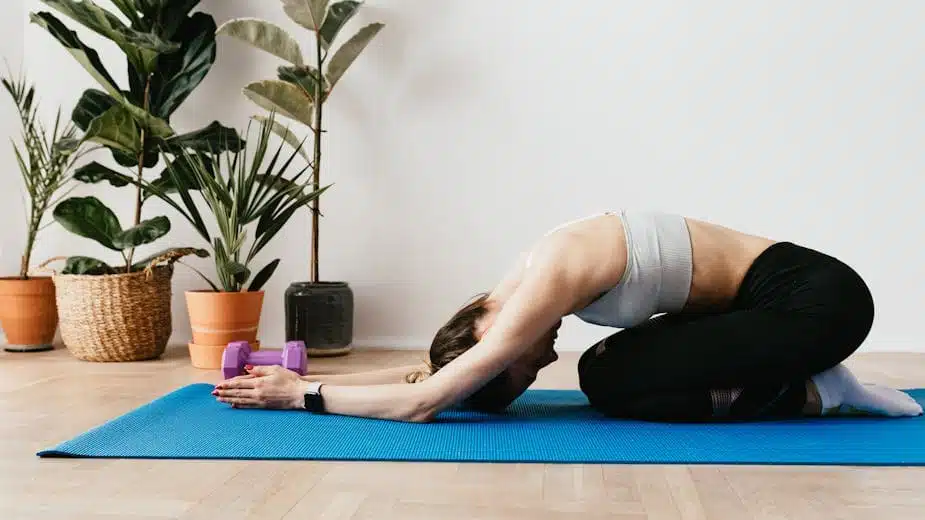
Do you suffer from persistent pelvic pain that leaves you feeling exhausted, stressed, and afraid to move? A gentle yoga practice focused on your pelvic floor can provide relief by reconnecting you with your body, soothing the nervous system, and promoting healing through mindful movements. Discover how “yoga for pelvic floor” can empower you to revitalize your well-being, reduce anxiety, and find comfort in each breath.
What is yoga for pelvic floor?
Yoga for pelvic floor is an integrative approach that combines conscious breathwork, present-moment awareness, and carefully chosen postures to alleviate pelvic pain and discomfort. By moving within your comfort zone and tuning into the sensations of your body, you can re-establish a natural harmony, decrease fear and depression, and enhance the vital mind-body connection.
The Main Benefits of Yoga for Pelvic Floor:
- Reduces anxiety, depression, and fear associated with chronic pelvic pain
- Encourages mental and emotional grounding through mindfulness practices
- Deepens body awareness and strengthens the mind-body link
- Calms the nervous system to promote relaxation and healing
- Stretches and lengthens the muscles and soft tissues of the pelvic floor
- Supports the functional relationship between the diaphragm and pelvic floor
- Re-educates muscle imbalances that contribute to pelvic floor dysfunction
- Improves overall strength, balance, mobility, and pelvic floor control
As the wise Wayne Dyer said, “You cannot always control what goes on outside. But you can always control what goes on inside.” Yoga for pelvic floor empowers you to focus inward, regaining a sense of harmony to find relief and revitalization.
8 gentle yoga poses to support pelvic floor health
Remember, these postures and movements should feel comfortable for you. Move, stretch, and breathe at your own pace within your comfort zone. If any pose causes discomfort, stop and consult a pelvic floor physical therapist. If you are pregnant, have hypermobility disorders, Ehlers-Danlos syndrome or other connective tissue disorders, consult a therapist before starting yoga for pelvic floor.
1 - Happy baby
Benefits: Stretches and decreases tension in the muscles of the pelvic floor and inner thighs.
Instructions:
- Lie on your back and gently bring one leg up at a time to meet your hands, grasping your feet, ankles or shins as feels comfortable for your hip flexibility.
- Keep your back straight and allow your pelvis to feel heavy, keeping your tailbone close to the ground.
- Connect with your breath, feeling your ribcage, abdomen and sit bones gently expanding outward as you visualize your tailbone sinking down toward the floor.
2 - Bound angle (seated, supported reclined or lying down)
Benefits: Opens the hips, stretching the muscles and connective tissues of the inner thighs.
Instructions:
- Choose the position – seated, reclined or lying down – that feels best for you.
- Bring the soles of your feet together and slowly let your knees fall out to the sides.
- Use pillows or blocks under your knees if needed to prevent hip discomfort or muscle guarding.
- Place one hand on your chest and one on your abdomen, feeling them rise and fall with your slow, deep breaths. Mindfully inhale for four seconds and exhale for six seconds.
3 - Supported savasana
Benefits: Calms the nervous system and relaxes the lumbopelvic area. This restorative pose is perfect for the end of a stressful day, allowing you to practice deep breathing exercises, meditation or relaxation techniques like progressive muscle relaxation and body scans.
Instructions:
- Place a bolster lengthwise on the mat and elevate one end using a block or blanket, so you can recline at a slight angle.
- If you have tailbone or low back pain, lying flat on your back may be better.
- Straighten your legs out or place support under your knees.
- For added comfort and relaxation, place blankets over your pelvis for gentle, soothing pressure.
4 - Supported child's pose
Benefits: Child’s pose soothes the nervous system and can evoke feelings of safety and peace by mimicking the fetal position. It also increases flexibility in the lumbopelvic region so you can breathe deeply into the back and sides of your ribcage.
Instructions:
- Begin in a tall kneeling position, placing a bolster/pillows in front of you and a pillow between your heels.
- Fold at the hips to lower your head and chest onto the supportive surface, allowing your sit bones to move towards your heels.
- You should feel fully supported and comfortable. Add extra pillows, blankets or towels wherever needed.
- If your ankles feel tight, place a rolled towel under the tops of your ankles.
5 - Tabletop rock backs
Benefits: Child’s pose can feel too intense for some due to the hip flexion, which may aggravate those with pudendal neuralgia or tight hips and pelvic muscles. Tabletop rock backs gently ease you into more hip flexion while isolating controlled hip joint mobility.
Instructions:
- Start in tabletop with hands and knees hip and shoulder-width apart.
- Inhale, shift your pelvis back while maintaining a straight spine, only bending at the hips.
- Exhale and pull your body back to starting tabletop position, rooting down through your hands and engaging your core.
- Rock back for 10 breaths.
6 - Cat cow
Benefits: Improves spinal mobility and control of each vertebral segment. Spinal mobility is key for pelvic floor health since the pelvic floor attaches to the base of the spine at the tailbone. Spinal mobility and control also optimize breathing and core activation.
Instructions:
- Begin in tabletop with hands and knees under hips and shoulders.
- Inhale, lifting your tailbone and head toward the ceiling as you arch your back, allowing your chest and abdomen to soften toward the floor.
- Exhale, pulling your belly button in toward your spine as you round your back up toward the ceiling, tucking your head and pelvis down and in.
- Continue these alternating motions for 10 breaths or as long as feels good.
- Once comfortable, intuitively explore – bending side to side like “wagging your tail” or making small or large pelvic circles, sweeping your pelvis out and down toward your heels and back up to tabletop.
7 - Supported puppy
Benefits: Elongates the spine and provides a deep stretch for the muscles of the pelvic floor.
Instructions:
- Begin in tabletop with feet flexed and active.
- Reach your hands forward to lengthen your spine, keeping your back long and straight by resting your forehead on a block or book.
- Walk your feet out slightly wider than your hips.
- Reach strongly through your heels and hands, visualizing your sit bones expanding and your tailbone reaching up and out with each inhale.
8 - Sphinx
Benefits: Stretches and lengthens the abdominal connective tissues and front of the hips. Sphinx strengthens the shoulders and increases spinal mobility.
Instructions:
- Begin lying face down.
- Press the tops of your feet and pubic bone into the mat as you lift your chest off the floor, positioning your elbows directly under your shoulders.
- Keep forearms, palms and fingers connected to the ground.
- Maintain a straight, long neck by reaching through the crown of your head.
- Avoid low back pain – if the stretch is too intense, place a pillow under your belly.
- If comfortable, breathe deeply into your abdomen and explore gentle side-to-side ribcage shifts or small rotations.
For more information and videos on yoga for pelvic floor, check out Dustienne Miller, CYT, PT, MS, WCS at Your Pace Yoga.
The next step: holistic pelvic floor care
Remember, there is no one-size-fits-all yoga for pelvic floor program! While these gentle postures provide pain-free movement alternatives to manage discomfort, working with a pelvic floor physical therapist ensures a comprehensive, personalized plan to address your specific needs. Contact a physical therapy clinic to learn about movement options, relaxation techniques, and holistic pain management strategies to support your pelvic floor.
In conclusion, by incorporating mindful yoga for pelvic floor into your life, you can revitalize your well-being, reduce anxiety and depression, and embrace the healing power of breath and gentle movement. Reconnect with your body, strengthen the vital mind-body link, and find relief – one conscious breath, one supportive pose at a time.